
Fabrics & lace
Satin, silk, tulle, organza and the famous laces — what wedding dresses are made of.
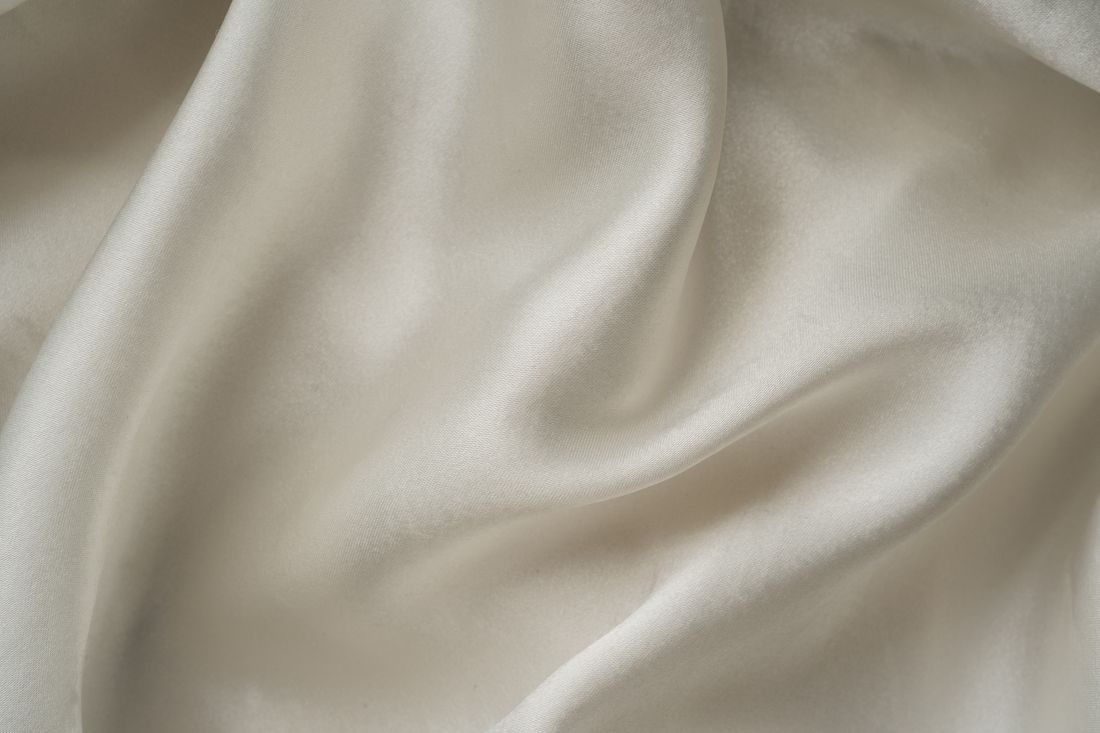
Fabrics
Satin
A dense, smooth fabric with a pronounced cool sheen on the face side. It holds its shape beautifully and resists creasing, making it ideal for structured silhouettes — ballgowns and mermaid styles. It works in any season, though it can feel warm on a hot summer day.
Mikado
A heavy silk-blend satin with a matte surface and a dense weave. It holds bold folds and architectural shapes without boning, which is why it is prized for clean minimalist silhouettes — column and A-line gowns with little or no embellishment. Perfect for autumn, winter, and evening weddings.
Silk
Spun from natural mulberry fibres, silk has a warm, living sheen and extraordinary softness. It breathes well and drapes beautifully, making it the finest choice for empire, sheath, and grecian silhouettes. Its only drawback is that it creases easily and requires careful handling throughout the day.
Crepe
A matte fabric with a fine grainy texture that skims the body softly without clinging. Crepe barely creases, drapes well on the bias, and looks stunning in modern, sleek silhouettes — sheath and A-line styles. It works beautifully across all four seasons.
Tulle
A weightless netting made from nylon or silk, indispensable for creating voluminous full skirts, underskirts, and layered overlays. Tulle is what gives a ballgown its fairytale, cloud-like volume. Soft silk tulle is gentle against the skin, while nylon tulle is more affordable and stiffer.
Organza
A sheer, crisp fabric that holds the shape of ruffles, flounces, and voluminous sleeves without losing its structure. Unlike tulle, organza adds definition and a subtle sheen. It is popular for overlays, overskirts, and three-dimensional floral embellishments.
Chiffon
A weightless, semi-sheer fabric with a soft matte shimmer, woven from natural or synthetic fibres. Chiffon falls in gentle waves and is essential for flowing skirts, long sleeves, and grecian silhouettes. It is the ideal choice for summer weddings and outdoor celebrations.
Taffeta
A crisp, springy fabric with a characteristic dry rustle and a subtle iridescent sheen. Taffeta holds the voluminous folds of ballgown skirts and creates sharp, sculptural silhouettes. It is especially popular for autumn and winter weddings, when a dramatic, formal aesthetic is called for.
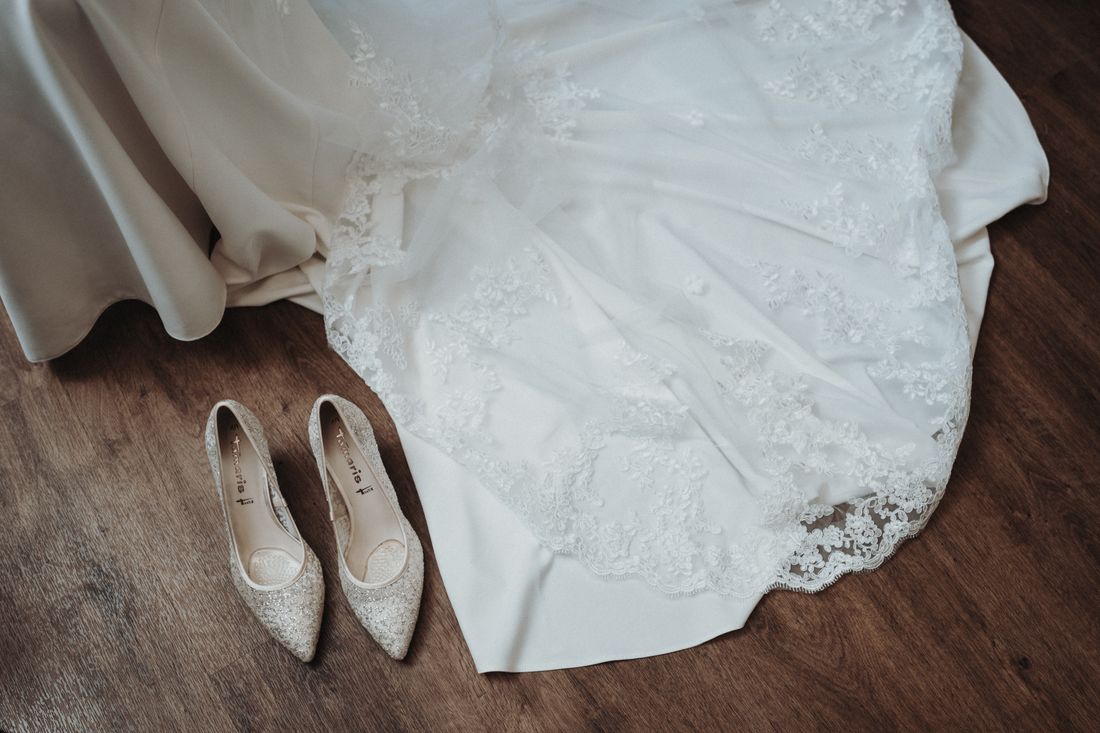
Lace
Chantilly
The finest French lace, featuring a delicate floral pattern and a scalloped edge worked in silk or nylon thread. Chantilly is the embodiment of subtle, romantic luxury: it lays weightlessly over satin or tulle without adding bulk. It is ideal for bodices, veils, and décolleté details.
Alençon
A noble French lace in which every motif is outlined with a raised silk cord, giving the pattern a rich three-dimensional quality. Alençon is heavier and more opulent than Chantilly, so it is used for statement details: bodices, trains, and wide hem borders. It is a hallmark of haute couture bridal design.
Guipure
A dense, raised lace without a net ground — the motifs are joined by small picot bridges, forming a bold, sculptural pattern that stands on its own. Guipure has a striking three-dimensional texture and holds its shape well, making it popular for boho and modern romantic styles. It looks especially beautiful on an open back.
Lace appliqué
Individual lace motifs — flowers, leaves, geometric shapes — that are cut out and hand-sewn onto tulle, satin, or illusion netting. Appliqué is what creates the coveted "second-skin" effect, where the pattern appears to be drawn directly on the body. The technique works with any base lace, from Chantilly to guipure.
Fabric is the foundation of a wedding gown. It determines how the silhouette behaves: a voluminous ballgown demands layers of tulle or organza, a fitted mermaid style calls for structured satin or crepe, and a flowing grecian dress is unthinkable without chiffon or natural silk. The choice of material also affects seasonality — heavy mikado and taffeta provide warmth in cooler months, while lightweight chiffon and tulle breathe easily on a warm summer day.
When weighing natural versus synthetic fabrics, it is important to understand the trade-offs. Natural silk, cotton tulle, and organically woven organza offer unmatched comfort and a living, warm sheen, but they require careful handling and can crease. Synthetic alternatives — polyester satin, nylon tulle — are more resistant to deformation, lighter in weight, and more budget-friendly, though they sometimes lack the texture and breathability of natural fibres. Modern blended fabrics (silk-polyester) often offer the best of both worlds.
Lace in a wedding gown is not merely decoration — it is a distinct artistic language. Chantilly whispers of romance, Alençon declares luxury, and guipure speaks to boldness and modernity. Lace can cover the entire gown in a single intricate pattern, or appear as a deliberate accent on the bodice, sleeves, or hem. Choosing the right lace is just as important as choosing the silhouette: together, they define the unique character of the dress.
Frequently Asked Questions
Which fabric suits a voluminous gown, and which suits a flowing one?
For a full ballgown silhouette, multi-layered tulle forms the base of the skirt, paired with satin or taffeta for the bodice — they hold volume and structure. For a flowing silhouette, chiffon, natural silk, and crepe are the best choices: they drape softly over the figure and create graceful movement with every step.
Which fabrics work best for a summer wedding, and which for a winter one?
In summer, favour lightweight, breathable fabrics: chiffon, silk, soft tulle, and light organza. They keep you cool and create an airy, romantic look. For autumn and winter weddings, mikado, taffeta, structured satin, and velvet add warmth and create a dramatic, sculptural silhouette.
What is the difference between guipure and Chantilly lace?
Chantilly is an ultra-fine net lace with a delicate floral pattern and a scalloped edge — it is lightweight and almost weightless. Guipure is a dense, raised lace with no net ground; the motifs are connected by small bridges, making it heavier, more textured, and bolder. Chantilly creates romantic sheerness; guipure creates a sculptural, statement effect.
Does silk crease, and how do you handle it?
Yes — natural silk is one of the most delicate fabrics and creases easily during transport and when seated. To minimise wrinkles, store the gown in a proper garment bag with the train carefully folded, and steam it with a handheld steamer before the ceremony. In wedding photographs, the gentle natural folds of silk look alive and beautifully organic.
What is mikado fabric and why is it so prized in bridal fashion?
Mikado is a heavy, matte silk-blend satin with a dense double weave that holds its shape without additional boning or structure. In bridal fashion it is prized for its architectural qualities: it creates clean geometric silhouettes, bold folds, and oversized bows without losing form. The fabric has a luxurious, contemporary feel that photographs beautifully.