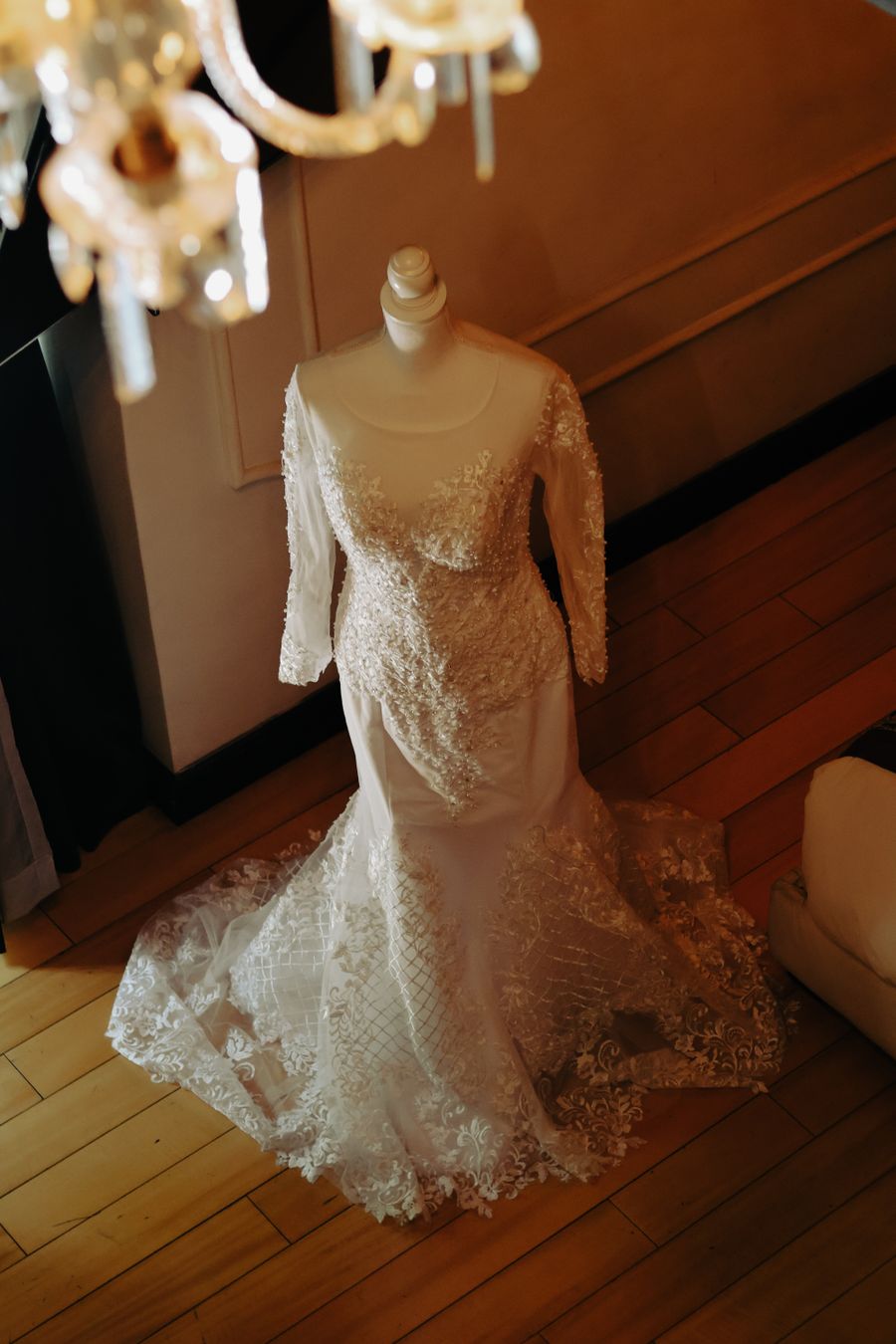
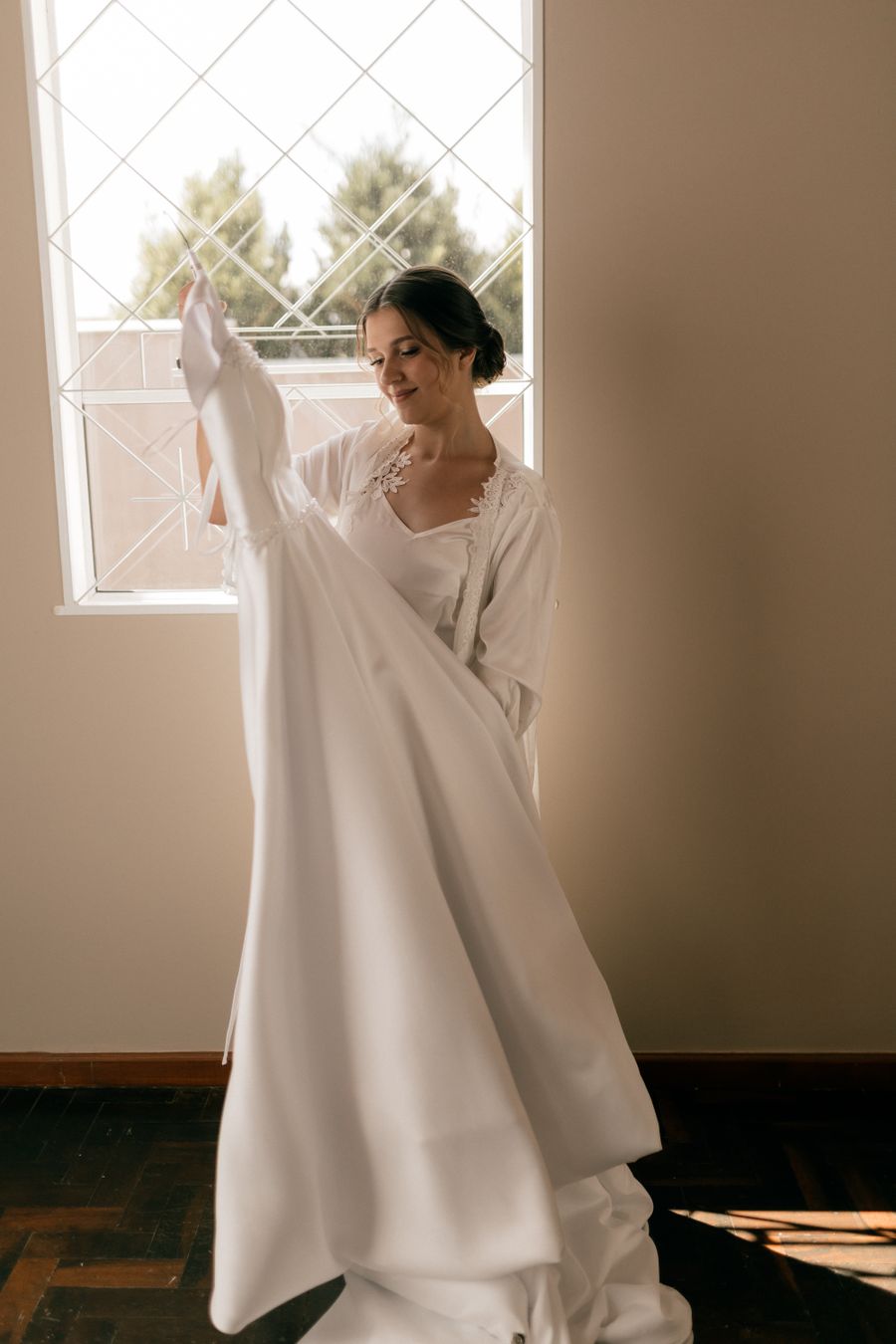
Sheath (Column)
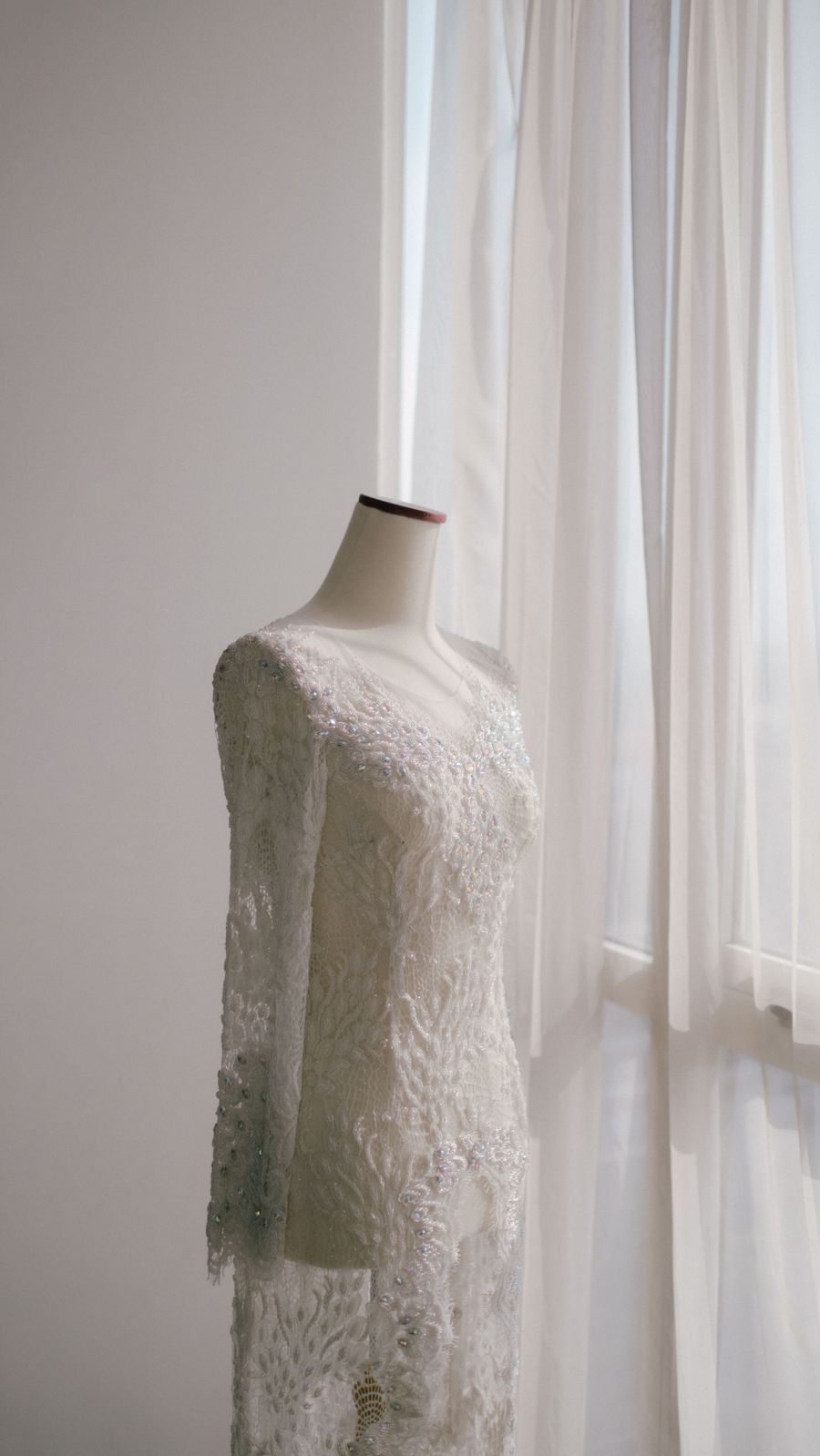
The sheath gown is a silhouette in which nothing is superfluous. It falls from the shoulders to the floor in nearly parallel vertical lines, gently following the body's contours without dramatic flare or constriction. This is the embodiment of modern minimalism — stylish, understated, and supremely demanding of cut quality and fabric.
Characteristics
- Vertical silhouette with no flare
- Waistline not emphasised or barely defined
- Floor-length as standard
- Luxurious fabrics: silk, satin, crepe
- Pure, uncompromising minimalism
History and Origins
The straight silhouette in bridal fashion traces back to images of ancient goddesses in draped chitons and medieval European court dress. In the 20th century it was rediscovered by Hubert de Givenchy and Yves Saint Laurent, who turned it into a symbol of unadorned elegance. In bridal fashion the style gained particular popularity from the 1990s onward, driven in part by the broader minimalist movement in design.
Cut and Construction
The sheath gown is engineered so that the fabric flows quietly along the body without creating unnecessary volume. The waistline is typically not emphasised, or only barely suggested. Length is generally floor-sweeping, occasionally ankle. Cut lines are clean and vertical. Signature fabrics include satin, crepe, silk, and dense chiffon — the silhouette demands immaculate fabric quality because any flaw is immediately visible.
Who It Suits
The sheath gown comes into its own on tall brides with a long, lean frame — it is virtually designed for rectangular and athletic body types. Petite brides may find it overwhelming. It is an excellent choice for ceremonies in contemporary loft venues, minimalist weddings, and civil celebrations.
Who it suits
Ideal for tall, slender brides with a rectangular or athletic figure. Perfect for modern, minimalist, or non-traditional weddings.